Sustainability
Farming Forever: How Winery Sustainability is Practiced in Santa Lucia Highlands
SLH Winery Sustainability at a Glance
1. Our farming families have been farming for hundreds of year
2. The insectary at Pisoni Vineyards: nature’s pest control
3. Morgan Winery: The Highlands’ Certified Organic Vineyard
4. McIntyre Vineyards: Turning almond shells into carbon sinks
5. Scheid Family Wines: The wind beneath the winery
6. Talbott Vineyards: A amarter way to scare birds
7. Sustainably Certified: The standard behind the seal
Deep Roots: The Families Who Started It All
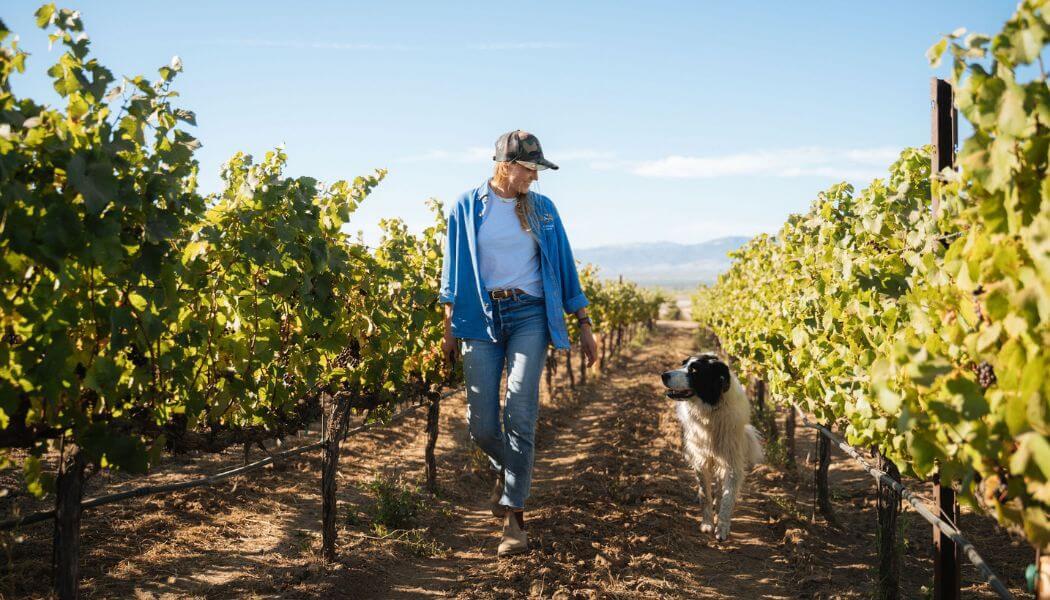
Some of the families farming the Santa Lucia Highlands today were here before California was a state. Some were here before California was even an idea. In 1769, sixteen-year-old José María Soberanes arrived with the Portola Expedition, surveyed the fog-wrapped Santa Lucia Mountains and the fertile Salinas Valley below, and never left. More than 250 years later, his descendants — the Bianchi and Panziera families — farm that same soil at Cortada Alta Vineyard, now managed by third- and fourth-generation farmers Matt and Zach Panziera.
A century after Soberanes, Swiss-Italian farmers from the Ticino region began arriving in northern California, many as dairy farmers, drawn by the same thing: land worth staying for. The Franscionis put down roots in the late 1880s; the Pisoni family followed, in 1868. The Caracciolis built four generations of produce farming in the Salinas Valley before they established Escolle Vineyard in the Highlands and Caraccioli Cellars.
Before any of these families grew grapes, they grew everything else — lettuce on the valley floor, sugar beets and cattle on the hillside ranches above. Gary Pisoni's father opposed his son's crazy idea to plant vines up there. According to family lore, his mother secretly financed him through five dry wells before he finally hit water. In 1982, the first Pisoni vines went in. Gary Franscioni, his neighbor and fellow Salinas Valley farming heir, eventually joined him — their handshake over a glass of Pinot Noir became Garys' Vineyard, one of the appellation's most celebrated sites.
For these families, sustainability was never a certification goal. It's a survival strategy — the kind passed down through generations of people who knew that if you took more than the land could give, there would be nothing left to hand down.
The Insectary at Pisoni Vineyards: Nature’s Pest Control
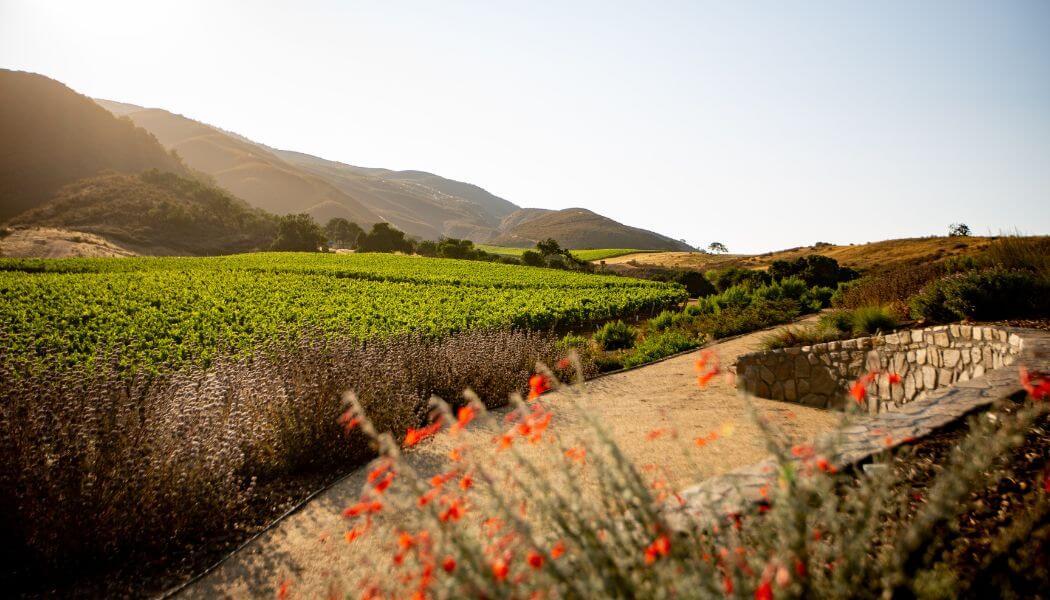
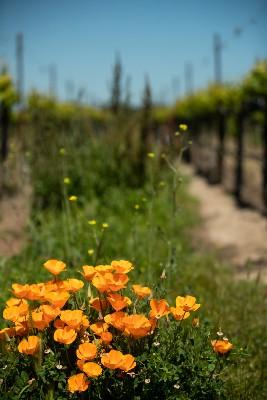
Walk the edges of the Pisoni family’s vineyard and you’ll find something unusual: an entire acre devoted not to grapes, but to wildflowers.
Long-flowering California buckwheat. Silver lupine, whose purple blooms draw in bees. California sagebrush, which provides nesting material for threatened bird species. The Pisoni insectary — one of the largest of its kind in California — is planted exclusively with native species, many of them specific to Monterey County and the microclimates of the Santa Lucia Highlands.
The design is deliberate. Vineyard manager Mark Pisoni and special projects manager Jazmin Lopez, a participant in the California Agricultural Leadership Program, selected plants with smallish blooms that are particularly effective at attracting the insects that keep the vineyard in balance. Parasitic wasps suppress mealybug populations. Hoverflies discourage aphids. Ladybugs feed on mites. No spray program required.
This is integrated pest management, or IPM — a holistic approach that combines beneficial insects, soil nutrient programs, careful monitoring of weather patterns, and trap-based pest tracking throughout the year. It’s more labor-intensive than reaching for a pesticide. It’s also better for the vines, the ranch, and everyone who works there.
The Pisoni Vineyard insectary is science and philosophy in the same garden.
Located in Santa Lucia Highlands, Pisoni Vineyards is open by appointment to the trade. Visit pisonivineyards.com.
Morgan Winery: The Highlands’ Certified Organic Vineyard
When Dan and Donna Lee planted Double L Vineyard in 1997, their twin daughters were five years old. They made a simple decision: no herbicides. They didn’t want their children growing up around chemicals.
That decision became a commitment. That commitment became Double L — the only certified organic vineyard in the Santa Lucia Highlands.
On 48 acres spanning Pinot Noir, Chardonnay, Syrah, and Riesling, Morgan farms without synthetic fertilizers, pesticides, or herbicides. Instead: compost, organic mildew sprays, and a deep investment in soil biology. “We have a healthy soil biome, which we think best expresses terroir,” vintner Dan Morgan Lee says. “Good healthy soil produces good wine. We’d rather feed our vines organic food than Snickers and Coke.”
Morgan has since added a “Real Organics” certification on top of USDA organic standards — a designation designed for growers who follow not just the letter of organic farming but its spirit.
The result? Wines that taste like a place. Which has always been the point.
Morgan’s tasting room is located in The Crossroads, in Carmel-by-the-Sea.
McIntyre Vineyards: Turning Almond Shells Into Carbon Sinks
Steve McIntyre, owner of Monterey Pacific and founder of McIntyre Vineyards, manages 20,000 acres of vineyards across Monterey, Napa, Lake, and San Luis Obispo Counties. He’s also co-founder of Sitos Group — and one of the driving forces behind a biochar facility that will change how California agriculture thinks about waste.
Here’s how it works: almond shells from nearby hulling and shelling operations — byproducts that would otherwise become a disposal headache — are fed into a slow pyrolysis process that transforms them into biochar. Biochar is a porous, carbon-rich material that, once applied to soil, resists decomposition for centuries. Rather than releasing carbon back into the atmosphere as CO₂ or methane, it sequesters it in the ground — acting, in one description from the Sitos Group, like a natural coral reef beneath the soil surface.
The environmental upside extends well beyond carbon sequestration. Biochar improves moisture retention, increases nutrient-holding capacity, and creates habitat for beneficial soil microorganisms. It reduces the need for chemical fertilizers. And it offers a meaningful solution for agricultural waste management at scale.
The Delano facility — the first commercial slow pyrolysis plant with a direct tie to agriculture on the West Coast — is designed to process 6,000 pounds of almond shell feedstock per hour. It will also generate clean electricity through Organic Rankine Cycle generators, feeding power back to the local grid.
The United Nations IPCC has identified biochar as a promising negative-emissions technology. McIntyre and Sitos Group are building the infrastructure to make it real.
McIntyre Family Wines' tasting room is located in Carmel Valley Village.
Scheid Family Wines: The Wind Beneath the Winery
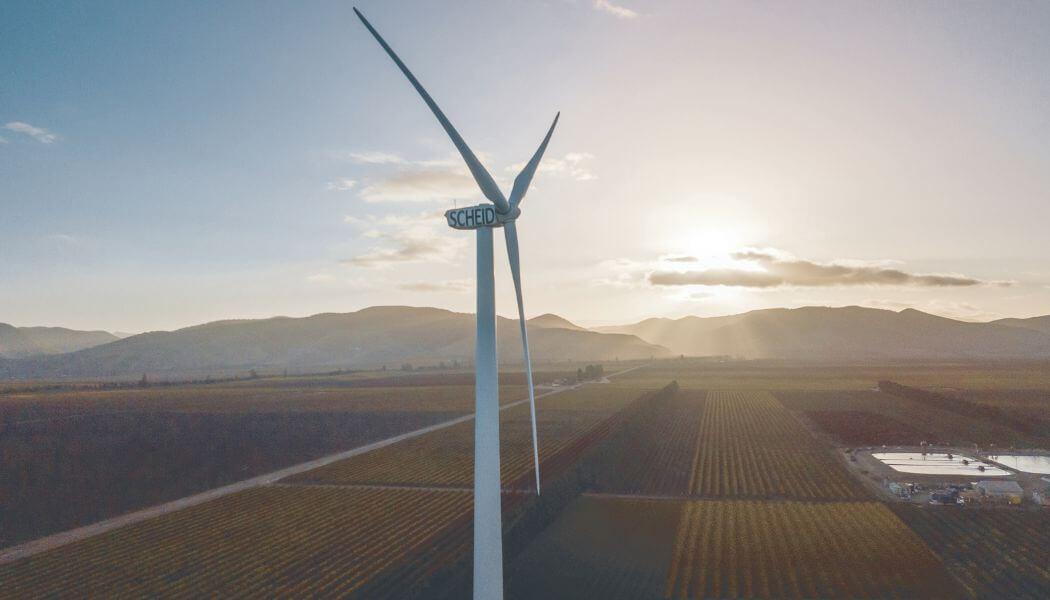
The Santa Lucia Highlands and Salinas Valley below are famous for their afternoon winds. Fierce, reliable, relentless — the kind of wind that makes grape growers both grateful and exhausted. Scheid Family Wines looked at those winds and saw something else entirely: a power source.
In 2017, Scheid installed a 400-foot-tall, 1.85-megawatt wind turbine on their estate — and haven’t paid an outside electricity bill for their winery operations since. The turbine generates 100% of the power needed to run the winery and bottling line, with enough energy left over to be fed back into the grid, supplying approximately 120 local homes with electricity each year. It is the only large‑scale U.S. winery powered 100% by wind.
The numbers tell the story. From 2017 through the end of 2025, the project avoided CO2 emissions of over 24,000 metric tons — the equivalent of taking over 5,000 gas-powered cars off the road for a full year.
Most wineries talk about sustainability as something they’re working toward. Scheid turned one of their terroir’s most defining characteristics — that relentless Salinas Valley wind — into total energy independence. Sometimes the best sustainable solution has always been right there, rattling the barn doors.
Scheid Family Wines has tasting rooms in Carmel-By-the-Sea and Salinas Valley.
Talbott Vineyards: A Smarter Way to Scare Birds
Bird damage during harvest is one of viticulture’s oldest problems. As grapes ripen and change color during veraison, birds notice — and descend. At Talbott Vineyards in the Santa Lucia Highlands, protecting fruit quality while staying true to sustainability goals required a creative solution.
The answer came in the form of a solar-powered green laser.
Talbott, operated by E & J Gallo, now uses the AVIX Autonomic Bird Laser deterrent system, manufactured by Bird Control Group. The device sweeps a continuous laser beam through the vineyard. To birds, the moving beam reads as a predator. They leave. No netting required, no noise cannons, no harm done — just a silent, solar-charged sweep that keeps the crop intact.
No external power source. No environmental impact. Proven effectiveness. It’s the kind of unglamorous innovation that quietly makes farming better.
https://www.talbottvineyards.com/
Sustainably Certified: The Standard Behind the Seal
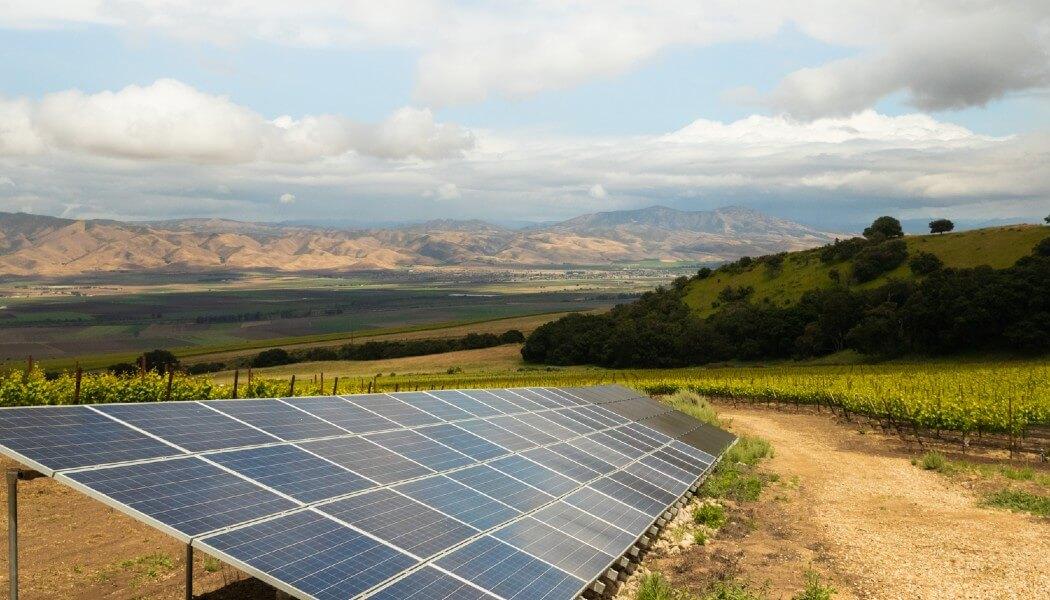
Across the Santa Lucia Highlands, a number of wineries and vineyards have pursued formal third-party verification of their sustainable practices through the Certified California Sustainable Winegrowing (CCSW), the California Sustainable Winegrowing Alliance (CSWA), and SIP Certified, Sustainability in Practice.
Founded by local sustainable farming pioneers including Santa Lucia Highlands grower and winery member Steve McIntyre of McIntyre Vineyards, SIP Certified operates on what it calls a “block-to-bottle” framework: independent, measurable scientific standards applied across the entire operation, from vineyard soil to winery production to the treatment of the workers who make it all possible. The program assesses sustainability across three dimensions — People, Planet, and Prosperity — ensuring that certified operations are looking after their employees and communities, not just their carbon footprint.
The CCSW program certifies vineyards and wineries individually. CSWA administers another widely adopted third-party certification for vineyards, wineries, and wines. Both certifications require a rigorous third-party audit.
Santa Lucia Highlands vineyards and wineries that have earned certified status include:
Apex Vineyard
Doctor’s Vineyard
Escolle Vineyard
Garys’ Vineyard
Lone Oak Vineyard
McIntyre Vineyard
Paraiso Vineyard
Pisoni Vineyards
Rosella’s Vineyard
Scheid Family Wines
Sierra Mar Vineyard
Soberanes Vineyard
Talbott Vineyards
Vigne Monte Nero
River Road Vineyard
To learn more or find SIP Certified wines, visit sipcertified.org.
Learn more and to find California Sustainable Winegrowing Alliance members and wines visit California Certified Sustainable Winegrowing.
The Bigger Picture
What connects an 1800s ranching family, a one-acre wildflower garden, a ton of almond shells, a wind turbine, and a green laser beam? The same thing that connects all good farming: a refusal to treat the land as a short-term resource.
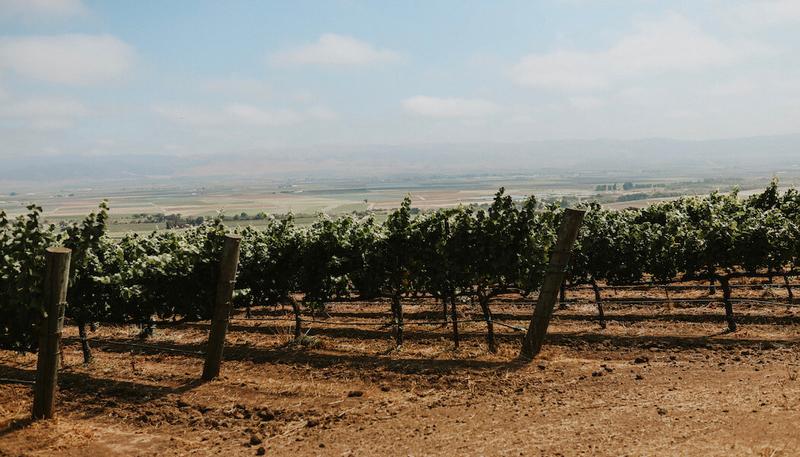
The Santa Lucia Highlands has always been shaped by forces larger than any single vintage — marine fog rolling in off Monterey Bay, afternoon winds that push the vines to work harder, soils that remember centuries of geology. The farmers here have learned, generation by generation, to work with those forces rather than against them.
Earth Month is a good time to raise a glass to the people doing that work. In the Santa Lucia Highlands, there are quite a few of them. We’re proud to say that several members have won prestigious California Green Medal Awards for their sustainable farming leadership, including Scheid Family Wines, Pisoni Vineyards, Jackson Family Vineyards and J. Lohr.
Interested in visiting the wineries and vineyards featured here? Explore our member directory at santaluciahighlands.com.